



Understanding Grammatical Cases: A Quick Overview
Grammatical cases are inflections attached to nouns, pronouns, and adjectives, indicating their role within a sentence. Unlike English, which relies heavily on word order and prepositions, Serbian and other Slavic languages use cases to show the relationship between words. This system allows for more flexibility in sentence structure and adds depth to the language.
Why Does Serbian Have Seven Cases?
The presence of seven cases in Serbian is not arbitrary. It is the result of centuries of linguistic evolution within the Slavic language family. Serbian inherited this system from Proto-Slavic, which itself derived cases from Proto-Indo-European. Each case in Serbian serves a specific grammatical function, making communication precise and nuanced. The complex case system also allows Serbian to convey meanings that in English would require additional words or context.
The Seven Serbian Cases and Their Functions
Each case in Serbian answers different questions and is used in specific contexts. Here’s a breakdown of the seven cases:
- Nominative (Nominativ): Used for the subject of a sentence. Answers the questions “who?” or “what?”
- Genitive (Genitiv): Expresses possession or origin. Answers “whose?” or “of what/whom?”
- Dative (Dativ): Indicates the indirect object, often the recipient. Answers “to whom?” or “for whom?”
- Accusative (Akuzativ): Marks the direct object of a verb. Answers “whom?” or “what?”
- Vocative (Vokativ): Used for direct address. Answers “O!” as in calling someone.
- Instrumental (Instrumental): Shows the means or instrument by which an action is performed. Answers “with whom?” or “with what?”
- Locative (Lokativ): Used with certain prepositions to indicate location. Answers “about whom?” or “about what?” or “where?”
The Historical Roots of Serbian Cases
The case system in Serbian can be traced back to ancient Indo-European languages. Over time, most Western European languages simplified their case systems, but Slavic languages, including Serbian, retained and refined theirs. The seven cases allow Serbian speakers to express relationships and nuances with precision. For example, changes in case endings can subtly alter the meaning of a sentence, which is essential for both written and spoken communication.
How Cases Enhance Communication in Serbian
Cases in Serbian do more than just indicate grammatical roles; they enrich the language by allowing for varied sentence structures. This flexibility helps speakers emphasize different parts of a sentence, create poetic expressions, and avoid ambiguity. For learners, mastering the case system opens up a deeper understanding of Serbian literature, media, and everyday conversations.
Practical Tips for Learning Serbian Cases
Mastering the seven cases is a challenge, but with the right approach, it becomes manageable:
- Practice with Real-Life Examples: Use sentences from books, songs, or Talkpal lessons to see cases in action.
- Memorize Key Questions: Each case answers specific questions. Learning these helps you identify cases quickly.
- Use Visual Aids: Charts and tables can help you remember case endings and their functions.
- Apply Cases in Context: Instead of memorizing lists, practice forming sentences and changing cases to see how meanings shift.
The Role of Technology in Learning Serbian Cases
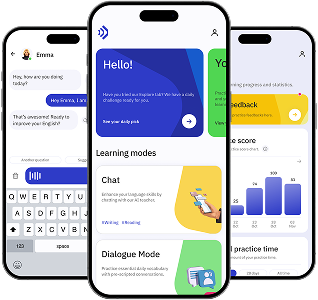
Modern language learning tools, such as Talkpal, are designed to help learners practice and internalize Serbian cases through interactive exercises, AI-powered corrections, and real-time feedback. These tools make it easier to grasp the logic behind cases and apply them in conversation, accelerating your progress toward fluency.
Conclusion: Embracing the Beauty of Serbian Cases
Understanding why Serbian has seven cases is key to appreciating the depth and expressiveness of the language. While the system may seem daunting at first, it is a cornerstone of Serbian grammar that unlocks the full potential of communication. By embracing the challenge and using modern learning resources like Talkpal, you’ll find that the seven cases become not just a hurdle, but a fascinating aspect of your Serbian language journey. Happy learning!