Understanding Korean Grammar: An Overview Korean grammar is a fascinating and unique aspect of the Korean language that sets it apart from many o...

The Unique Alphabet One of the first things that stands out about Ukrainian grammar is its unique alphabet. The Ukrainian language uses the Cyril...

Introduction to Belarusian Grammar Belarusian, an East Slavic language, possesses a rich linguistic heritage that often goes unnoticed in the sha...

Introduction to Azerbaijani Grammar Azerbaijani, also known as Azeri, is a fascinating language spoken primarily in Azerbaijan and northwestern I...

Introduction to Swedish Grammar Swedish, a North Germanic language spoken by roughly 10 million people primarily in Sweden and parts of Finland, ...

Introduction to Catalan Grammar Catalan is a Romance language spoken in Catalonia, Valencia, the Balearic Islands, and parts of Aragon in Spain, ...

Introduction to Japanese Grammar Japanese grammar is a unique and fascinating subject that often leaves learners both puzzled and intrigued. Unli...

Introduction to Afrikaans Grammar Afrikaans, a West Germanic language primarily spoken in South Africa and Namibia, is a unique and fascinating l...

Introduction to Dutch Grammar Dutch grammar, like any language's grammar, is a system of rules that govern how words are used to form phrases, cl...

The Importance of Hindi Grammar Hindi, an Indo-Aryan language, holds a prominent place not only in India but globally due to its rich cultural he...

Introduction to Armenian Grammar Armenian, an Indo-European language with its unique script, is spoken primarily in Armenia and by the Armenian d...

Introduction to Chinese Grammar Chinese grammar is a fascinating subject that intrigues linguists, language learners, and anyone interested in un...

Introduction to Spanish Grammar Spanish, known as Español in its native tongue, is one of the most widely spoken languages globally. With over 46...

Introduction to Finnish Grammar Finnish, a language primarily spoken in Finland, belongs to the Uralic language family. It stands out due to its ...

The Unique Nature of English Grammar English grammar is a fascinating subject that has intrigued linguists and language enthusiasts for centuries...

The Rich History of Arabic Grammar Arabic grammar, also known as "Nahw" in Arabic, has a rich and intricate history that stretches back over a mi...

Introduction to French Grammar French grammar, like any language's grammar, is the set of rules that govern how sentences are constructed in Fren...

The Complexity of German Grammar German grammar is renowned for its complexity and precision, making it both a challenging and fascinating subjec...

Unique Characteristics of Portuguese Grammar Portuguese, a Romance language spoken by millions worldwide, particularly in Portugal and Brazil, ha...

Introduction to Counting in Welsh Welsh, or Cymraeg, is a member of the Brythonic branch of the Celtic languages. Spoken predominantly in Wales, ...

The Basics of Italian Grammar Italian grammar is a fascinating subject that reflects the richness and complexity of the Italian language. It is k...

Introduction to Counting in Tamil Learning to count in Tamil can be a fascinating and enriching experience. Tamil, one of the oldest classical la...

Introduction to Counting in Slovak Learning to count in a new language can be a rewarding experience and is often one of the first steps in becom...

Understanding the Basics of Urdu Numerals Urdu, the national language of Pakistan, uses a numeral system that is derived from the Arabic script. ...

Introduction to Counting in Turkish Learning to count in a new language can be both exciting and challenging. Turkish, a fascinating and rich lan...

Introduction to Counting in Tagalog Learning to count in Tagalog, the national language of the Philippines, is a valuable skill for anyone intere...

Introduction to Swahili Numbers Swahili, also known as Kiswahili, is a widely spoken language in East Africa. It is the official language of Keny...

Introduction to Romanian Numbers Romanian is a Romance language spoken primarily in Romania and Moldova. Learning how to count in Romanian can be...

Introduction to Counting in Persian Learning to count in Persian (Farsi) can be an enriching experience for language enthusiasts and travelers al...

Introduction to Counting in Serbian Learning how to count in a new language is often one of the first steps in acquiring basic communication skil...

Introduction to Counting in Marathi Learning how to count in a new language can be an exciting and enriching experience. Marathi, an Indo-Aryan l...

Introduction to Counting in Norwegian Learning how to count in Norwegian can be an exciting and rewarding experience, whether you're planning a t...

Introduction to Counting in Maori The Maori language, or te reo Maori, is a cornerstone of the cultural heritage of the indigenous Maori people o...
Introduction to Polish Numbers Counting in Polish can initially seem challenging due to its unique pronunciation and grammatical rules. However, ...

Introduction to Counting in Nepali Learning to count in a new language can be an exciting and rewarding challenge. Nepali, the official language ...

Understanding the Basics of Counting in Malay Learning how to count in Malay can be a rewarding experience, especially if you are planning to tra...

Introduction to Kannada Numbers Kannada, one of the Dravidian languages, is predominantly spoken in the Indian state of Karnataka. Learning to co...

Introduction Learning to count in another language is a fundamental skill for anyone interested in expanding their linguistic capabilities. Maced...

Introduction to Counting in Icelandic Learning to count in Icelandic can be a fun and rewarding experience. Icelandic, a North Germanic language, ...
Introduction to Latvian Numbers Learning a new language can be a rewarding experience, and understanding how to count is one of the fundamental s...

Introduction to Counting in Kazakh Kazakh is a Turkic language spoken primarily in Kazakhstan, as well as in parts of China, Mongolia, and other ...

Introduction to Counting in Lithuanian Learning to count in Lithuanian can be a fun and rewarding experience, especially for those interested in ...

Introduction to Counting in Hungarian Hungarian, known as Magyar, is the official language of Hungary and is spoken by approximately 13 million p...

Introduction to Counting in Greek Learning how to count in Greek is an exciting endeavor, whether you're preparing for a trip to Greece, delving ...

Introduction to Counting in Hebrew Learning to count in Hebrew can be a fascinating and enriching experience. Hebrew, the ancient language of the...

Introduction to Counting in Bulgarian Counting in a new language can be both a fun and challenging experience. Bulgarian, a South Slavic language...

Understanding the Basics of Counting in Estonian Learning to count in Estonian can be a fun and rewarding experience, especially if you are plann...

Introduction to Counting in Czech Learning to count in a new language is an essential step for anyone looking to become proficient. In this artic...

Introduction to Counting in Japanese Learning how to count in Japanese can be a fascinating and rewarding experience. It not only helps you under...

Introduction to Counting in Croatian Learning to count in a new language can be a fascinating and rewarding experience. Whether you are planning ...
Talkpal is an AI-powered language tutor available on web and mobile platforms. Accelerate your language fluency, chat about interesting topics by writing or speaking, and receive realistic voice messages wherever and whenever you want.



Talkpal, Inc., 2810 N Church St, PMB 54222, Wilmington, Delaware 19802, US
 English
 Deutsch
 Français
 Español
 Italiano
 Português
 Nederlands
 Suomi
 Svenska
 Čeština
 日本語
 中文 (简体)
 हिंदी
 한국어
 Українська
 Polski
 عربي
 Հայերեն
 Azərbaycanca
 Български
 Hrvatski
 Dansk
 Eesti keel
 Ελληνικά
 עִברִית
 Magyar
 Latviski
 Lietuvių
 Norsk
 Türkçe
 Bosanski
 中文 (繁體)
 Galician
 Íslenskur
 Bahasa Indonesia
 Македонски
 Bahasa Melayu
 नेपाली
 فارسی
 Português
 Română
 Русский
 Srpski
 Slovenčina
 Slovenščina
 தமிழ்
 ภาษาไทย
 Shqip
 Gaeilge
 سۆرانی
 Монгол хэл
 Tiếng Việt
 Cymraeg
 O‘zbekcha
 বাংলা
 Malti
 اردو
 Af-Soomaali
 ਪੰਜਾਬੀ
 ქართული
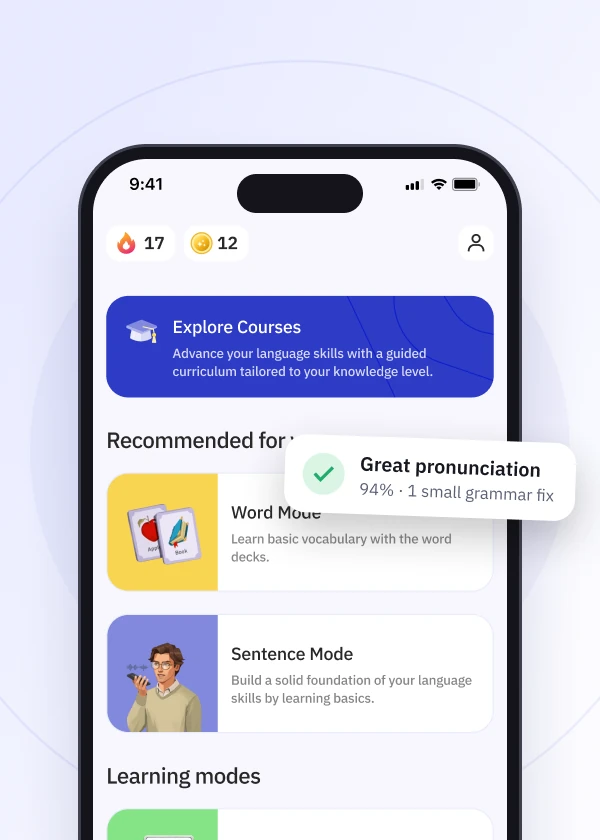
Talkpal turns AI into your personal language coach.
 Immersive, realistic conversations
Instant feedback on pronunciation and grammar
Personalized learning
 130+ languages ·
★ 4.7
rating